Why You Should Never Leave Your Phone Number on Your Car Dashboard
This guide explores the severe privacy and security risks associated with displaying personal contact information on vehicles. What seems like a polite gesture for parking management is actually a gateway for harassment, financial fraud, and identity theft.
Introduction: The "Convenient" Security Flaw
It is a remarkably common sight across crowded metropolitan cities in India: a brightly colored piece of paper resting on a car's dashboard bearing a handwritten or printed 10-digit mobile number. Sometimes it includes a polite note: "If blocking, please call."
In a country where parking space is practically a luxury asset, double-parking or temporarily blocking another vehicle is often an unavoidable reality of daily life. For decades, leaving a phone number behind has been considered the polite, neighborly thing to do. It prevents people from angrily honking or keying your car while you run a quick errand.
However, we are no longer living in the early 2000s. We live in an era of hyper-connected digital identities, where your 10-digit mobile number is the master key to your entire digital existence. It is linked to your bank accounts (UPI), your social media, your Aadhar card, and your family's WhatsApp groups.
By leaving your phone number on your dashboard, you are effectively taping your digital master key to the window for anyone passing by to copy. In this comprehensive guide, we break down exactly why this practice is dangerously obsolete and how modern technology provides a much safer alternative.
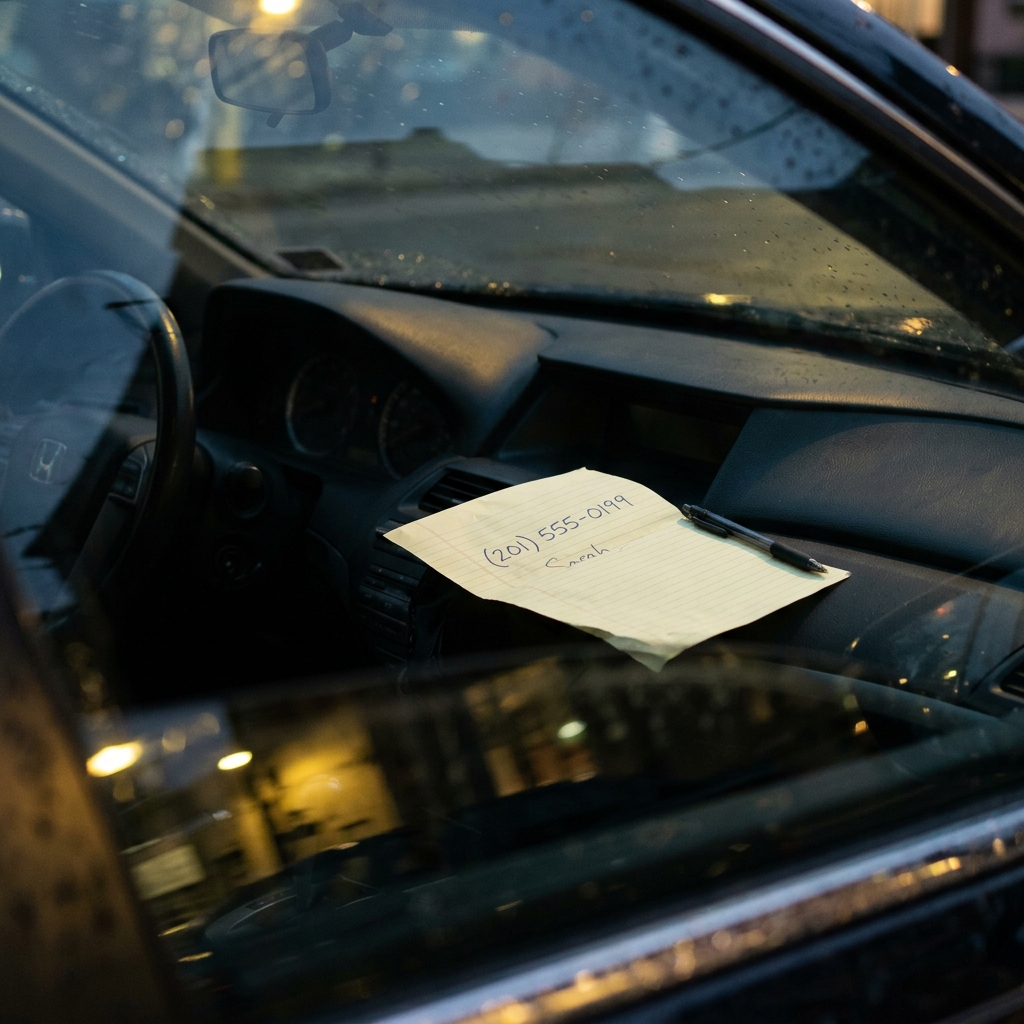 Caption: A handwritten phone number is an open invitation for data harvesting.
Chapter 1: The Anatomy of Dashboard Data Theft
When you think of a data breach, you likely picture a shadowy hacker in a dark room breaking into a corporate server. But modern data harvesting is often much more low-tech and opportunistic.
The "Scraping" Economy
Data brokers and scammers are constantly building databases of active, verified phone numbers. A car parked in a public space with a phone number on the dashboard is an incredibly lucrative target.
Consider the information a malicious actor can gather just by looking at your car:
- Your Verified Phone Number: They know the number is active because you left it there to be reached.
- Your Approximate Wealth: The make, model, and condition of your car provide an immediate socio-economic profile.
- Your Location Habits: If your car is parked outside a high-end gym every morning at 7 AM, a stalker or thief now knows your routine.
- Your Identity: In India, anyone with your phone number can plug it into apps like Truecaller, Google Pay, or PhonePe to instantly retrieve your real, legal name.
The "Walking Harvester"
Scammers employ individuals to simply walk through busy commercial parking lots, railway station parking, or mall basements, snapping photos of dashboards. Within an hour, a single person can harvest hundreds of verified phone numbers, neatly categorized by the type of car driven. These targeted lists are then sold on the dark web or Telegram groups to organized scam syndicates.
Chapter 2: The Disproportionate Risk to Women
While privacy erosion affects everyone, the physical and psychological risks are exponentially higher for female drivers. The practice of displaying a phone number transforms a minor parking inconvenience into a severe personal safety threat.
The Stalking Threat Vector
When a woman leaves her number on her car, she is unknowingly providing a direct line of communication to any passerby. The trajectory from a simple phone number to a stalking situation is terrifyingly short:
- A passerby notes the number and the car.
- They use caller-ID apps to find her name.
- They look up her name on Instagram, Facebook, or LinkedIn.
- They begin sending unsolicited WhatsApp messages.
Law enforcement agencies across India have reported a significant spike in harassment cases originating from phone numbers pulled directly from vehicle dashboards or "For Sale" signs on car windows.
The False Sense of Security
Many women are advised to leave a male relative's phone number on the dashboard instead. While this mitigates immediate gender-based harassment, it does not solve the underlying problem. It still exposes the family to financial scams, and in an actual emergency (like a minor accident), the person standing next to the car cannot directly communicate with the person driving it.
Chapter 3: Financial Scams Enabled by Exposed Numbers
In the age of Unified Payments Interface (UPI), your phone number is your bank account. Scammers specifically target numbers harvested from premium vehicles because they assume the owner has a higher bank balance.
Scam Tactic 1: The "Accident" Extortion
A scammer takes down your number and your license plate. Hours later, they call you in a panic, claiming you hit their vehicle or a pedestrian while backing out of the parking lot and drove away. They threaten to go to the police with "witnesses" unless you immediately transfer money via UPI to cover the "damages." Caught off guard and fearing legal trouble, many victims pay the extortion fee.
Scam Tactic 2: The Fake Tow Truck
You receive a call: "Sir, this is the traffic police towing division. Your car [Insert Make and Model] is parked illegally. If you pay the fine via this UPI link right now, we will drop the car back. Otherwise, it goes to the impound lot." Because they know exactly what car you drive and your phone number, the scam sounds highly credible.
Scam Tactic 3: Targeted Phishing
Scammers send SMS messages appearing to be from your car's manufacturer or your insurance company: "Your policy for [Vehicle Model] expires today. Click here to renew." Because the message contains specific, accurate details about your vehicle, the click-through rate on these malicious links is astronomically high.
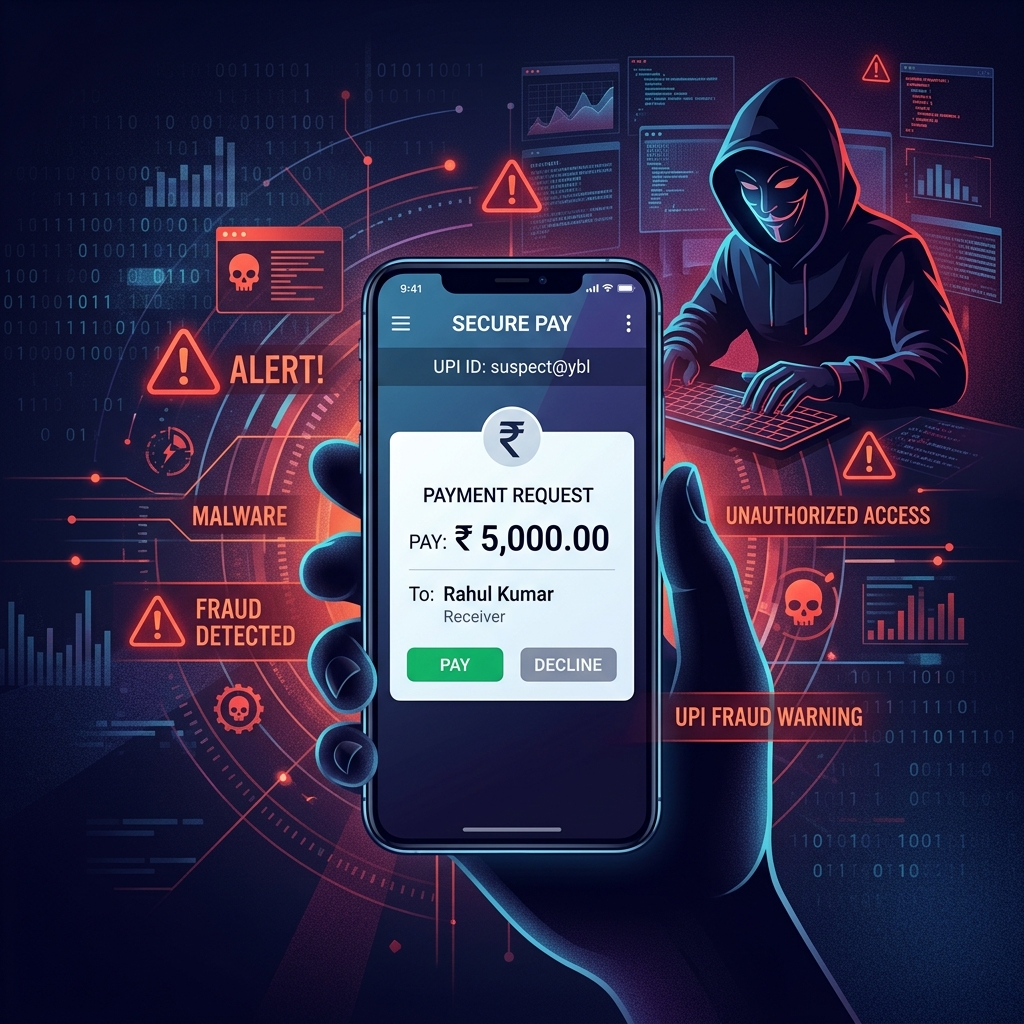 Caption: Scammers use vehicle details to craft highly believable, targeted phishing attacks.
Chapter 4: The Cost of a Data Breach
We often underestimate the emotional and financial toll of having our personal data compromised.
Financial Repercussions
If you fall victim to a targeted UPI scam or phishing attack, the financial losses can range from a few thousand rupees to your life savings. Recovering stolen funds through cybercrime cells is notoriously difficult and time-consuming.
The Emotional Toll
Beyond money, the psychological stress of being harassed, stalked, or repeatedly targeted by scammers takes a heavy toll. Changing a primary phone number—one you have had for a decade—is a logistical nightmare. You have to update your bank, your Aadhar, your employer, and hundreds of contacts, all because you wanted to be polite about parking.
Chapter 5: Legal Perspectives on Public Data Exposure in India
With the introduction of the Digital Personal Data Protection (DPDP) Act, India is moving toward a much stricter privacy framework. While the act primarily governs how corporations handle your data, it reflects a growing societal awareness that personal data must be protected.
However, the law cannot protect you if you voluntarily publish your data in the public domain. When you leave your phone number on a dashboard, it legally enters the public sphere. If a data broker collects it, arguing that they "stole" it is legally complex because you effectively broadcasted it to the street.
The onus of protecting your most critical personal identifier falls squarely on you.
Chapter 6: The Solution: Decoupling Contact from Identity
If leaving a phone number is dangerous, but blocking someone's car without leaving a way to be contacted is incredibly rude (and risks vandalism), what is the solution?
The answer lies in Asynchronous, Anonymous Communication. We must decouple the ability to contact a person from the necessity of knowing their identity.
Enter the Smart QR Parking Sticker
Technology companies like LinkNPark have developed the ultimate solution to this dilemma: The Smart QR Tag.
Instead of a phone number, you place a highly visible, durable QR code sticker on your windshield. This sticker contains absolutely zero personal information. It is simply a unique cryptographic identifier linking to your vehicle's profile in the cloud.
How It Works for the Reporter
When someone is blocked by your car, they do not need to download an app. They simply point their smartphone camera at the QR code. They are taken to a secure web portal (like scan.linknpark.in) where they can select a reason for contacting you (e.g., "Blocking Driveway," "Lights On").
How It Works for You
The cloud server receives the request and instantly routes it to your phone via an App Push Notification or an SMS. You see the alert, and you can even open a secure, anonymous chat session to reply: "Sorry, coming down in 2 minutes!"
At no point does the reporter see your name, your phone number, or your social media. And at no point do you see theirs. Total communication, zero privacy compromise.
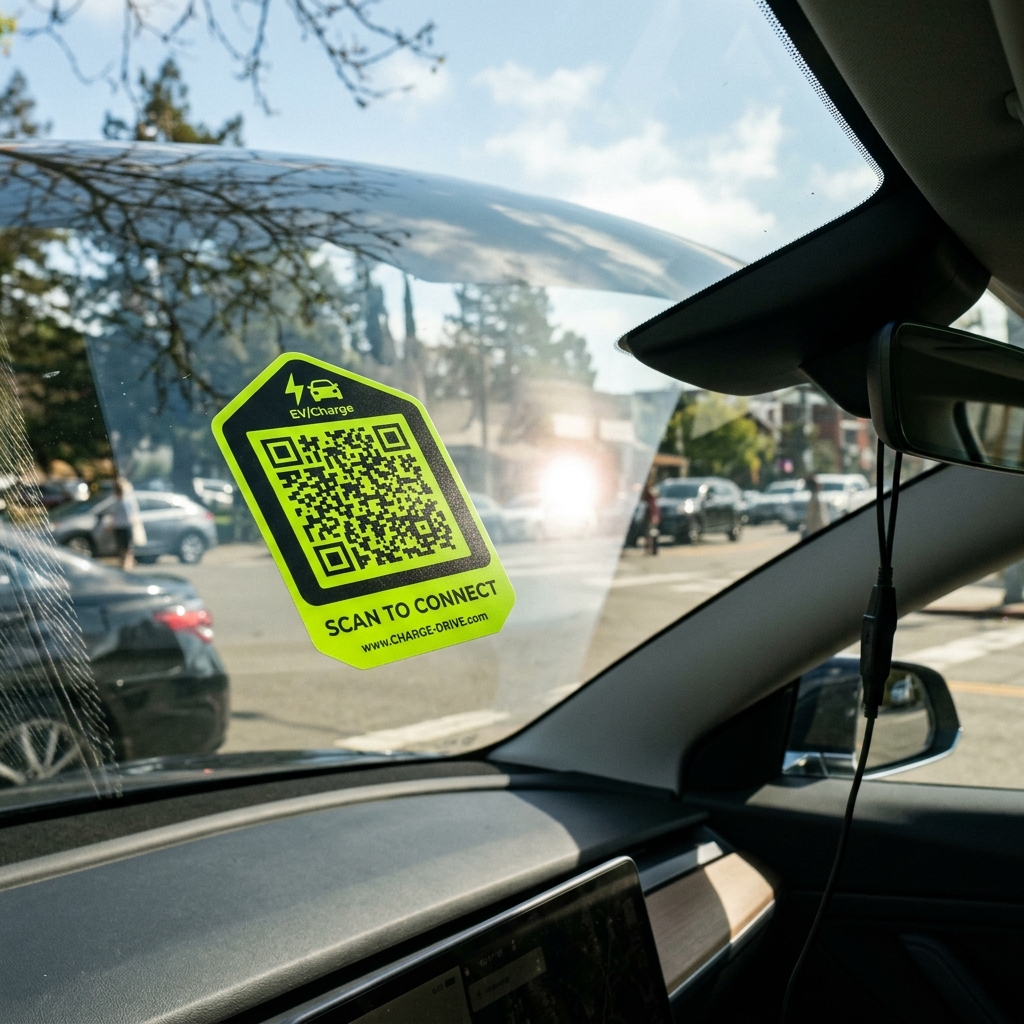 Caption: Smart QR stickers facilitate instant communication without exposing a single piece of personal data.
Chapter 7: How LinkNPark Specifically Protects Your Identity
While several basic QR code generators exist, relying on a dedicated ecosystem like LinkNPark offers enterprise-grade security for consumers.
- No Direct Number Routing: Some inferior services just use the QR code to initiate a standard phone call. This still exposes your number to caller ID apps. LinkNPark routes everything through internet-based WebSockets and secure push notifications, entirely bypassing the telecom network's caller ID vulnerabilities.
- Offline SOS Capabilities: If your phone's internet is off, the system gracefully degrades to sending you an automated SMS from a masked central server, ensuring you never miss an emergency alert while keeping your real number hidden.
- Encrypted Databases: Your personal data (email, phone number) is encrypted in secure databases (like Supabase). The public QR code only contains a randomized alphanumeric string (e.g.,
STK-2026-X7Y9). It cannot be reverse-engineered. - Spam Protection and Rate Limiting: If a malicious actor tries to scan your QR code 50 times to annoy you, the system's rate-limiting automatically blocks the spam, a feature impossible to implement with a piece of paper on a dashboard.
Chapter 8: The Role of Residential Societies in Enforcing Privacy
Resident Welfare Associations (RWAs) play a massive role in urban parking management. Many societies currently force visitors or residents to leave a slip of paper with their phone number on the dashboard when parking in guest spots.
Modernizing Society Security
Societies must realize they are inadvertently forcing their residents and guests to compromise their privacy. By adopting Guardian Networks (a B2B feature of LinkNPark), societies can mandate that residents use smart tags. Security guards can scan a badly parked car, and the system will automatically alert the resident, entirely removing the need for public displays of phone numbers.
FAQ: Car Dashboard Privacy & Smart Stickers (Answer Engine Optimized)
Q: Is it safe to leave my phone number on my car dashboard? A: No. Leaving your phone number on your dashboard is highly unsafe. It exposes your primary contact detail to data scrapers, scammers, and potential stalkers. It can lead to targeted UPI fraud, phishing attacks, and severe harassment.
Q: How can someone scam me just by having my phone number and license plate? A: Scammers use your phone number to find your real name via apps like Truecaller or UPI platforms. They then call you claiming you caused an accident or are parked illegally, using your exact vehicle model to sound credible, and extort money from you under threat of police action.
Q: What is a smart parking QR sticker? A: A smart parking QR sticker (like LinkNPark) is a decal placed on your windshield that allows people to contact you without seeing your phone number. When scanned, it opens a secure web page where they can send you an alert, which you receive as a private app notification.
Q: Do people need a special app to scan a smart parking sticker? A: No. Anyone with a standard smartphone camera can scan a LinkNPark sticker. It opens a regular webpage, allowing them to send you an alert in under 30 seconds without installing any software.
Q: How does a smart sticker protect women's safety? A: It provides a massive shield for personal safety by completely anonymizing the driver. A woman can be notified instantly if her car is blocking someone, or if her lights are left on, without ever giving a stranger access to her WhatsApp, social media, or personal phone number.
Conclusion: Upgrade Your Privacy
We upgrade our phones every two years, we use biometric locks on our doors, and we use two-factor authentication for our emails. Yet, millions of us still use a 1990s method of writing our most sensitive personal identifier on a piece of paper and leaving it in public view.
It is time to treat your mobile number with the security it deserves. Remove that piece of paper from your dashboard today. The risks of harassment, financial fraud, and stalking are simply too high to justify the convenience.
Embrace the future of vehicle communication. Protect your privacy, stay reachable, and park smarter.
[Get your LinkNPark Smart QR Sticker today and secure your digital identity.]